The quick answer
Most testosterone confusion comes down to a handful of words: total vs free testosterone, SHBG (the protein that locks testosterone up), LH (the brain's "make more" signal), aromatase (which turns some testosterone into estradiol) and the difference between a supplement and prescription TRT. Once you know these 12 terms, your lab report, your doctor's explanation and every supplement label become far easier to read. And if your numbers are normal but your energy and drive are not, a simple daily routine such as SodaPeak is where we suggest you start.*
Why the vocabulary matters
Men usually meet testosterone jargon at a stressful moment: a lab report arrives with abbreviations nobody explained, a friend mentions "his SHBG was high", or an ad promises to "unlock free T". Without the words, it is hard to tell a useful fact from marketing noise, and hard to ask your doctor the right question.
Below are the 12 terms that come up most often, explained the way we would explain them to a friend over coffee. No textbook required.
The 12 testosterone terms, explained simply
1. Testosterone
The main male sex hormone, made mostly in the testes (and in small amounts by the adrenal glands). It supports sex drive, erections, muscle and bone, red blood cell production, mood and energy. Levels are highest in your late teens and twenties and drift down slowly afterwards.
2. Total testosterone
The number most labs report first: all the testosterone in your blood, whether it is attached to proteins or not. It is the standard starting test. We explain the usual ranges in normal testosterone levels by age.
3. Free testosterone (free T)
Only a small slice of your testosterone floats around unattached. That "free" portion is the part your tissues can use straight away. Because direct measurement is tricky, many labs calculate free testosterone from your total testosterone, SHBG and albumin. Some men have a normal total number but a lower free number — one reason "my level is normal, so why do I feel like this?" is such a common question.
4. SHBG (sex hormone-binding globulin)
A protein made in the liver that grabs testosterone and holds it tightly. Think of it as a sponge: the more SHBG you have, the less testosterone is left free. SHBG tends to rise with age, which is why free testosterone usually falls faster than total testosterone in older men. Excess weight and insulin resistance tend to push SHBG the other way, so the full picture always needs context.
5. Albumin and "bioavailable" testosterone
Albumin is a common blood protein that also carries testosterone, but it holds on loosely. Free testosterone plus the loosely bound albumin portion is called bioavailable testosterone — the share your body can realistically access.
6. LH (luteinizing hormone)
The messenger. Your brain's pituitary gland releases LH to tell the testes "make testosterone". Doctors often test LH alongside testosterone because it shows where a problem starts: low testosterone with high LH points to the testes, while low testosterone with low or normal LH points to the signalling from the brain.
7. Aromatase and estradiol
Men need some estrogen too. An enzyme called aromatase converts a portion of testosterone into estradiol, the main estrogen. Fat tissue contains aromatase, which is one reason extra belly fat and lower testosterone so often travel together — we cover that loop in does belly fat lower testosterone?
8. Diurnal rhythm
Testosterone follows a daily cycle: highest in the morning, lower by the evening. That is why blood tests are booked early, usually between about 7 and 10 a.m., and why a low afternoon result is not a reliable verdict.
9. ng/dL and nmol/L
The two units you will see on reports. US labs use nanograms per deciliter (ng/dL); many other countries use nanomoles per liter (nmol/L). Multiply nmol/L by about 28.84 to get ng/dL — so 10.4 nmol/L is roughly 300 ng/dL.
10. Hypogonadism
The medical name for consistently low testosterone together with symptoms. Primary hypogonadism means the testes are not producing enough; secondary means the brain is not sending enough signal. It is a diagnosis made by a doctor after repeated morning tests, not something a single number or an online quiz can decide.
11. Andropause (or "male menopause")
A popular term, not a precise diagnosis. Unlike menopause, testosterone does not switch off in midlife; it slides gradually. Doctors are more likely to say "age-related testosterone decline", or "late-onset hypogonadism" when levels are clearly low and symptoms are present.
12. TRT (testosterone replacement therapy)
Prescription testosterone delivered as gels, injections, patches or pellets, used for diagnosed hypogonadism and monitored with regular blood work. Because it adds testosterone from outside, it can reduce the body's own production and sperm output — one reason it is a medical decision. A dietary supplement is a completely different category; see testosterone booster vs TRT for the full comparison.
Bonus terms you will see on supplement labels
- Cortisol. Your main stress hormone. When stress and short sleep keep it high for weeks, men often notice lower energy and drive. Managing stress is part of any testosterone-friendly routine.
- Structure/function claim and the asterisk (*). In the US, a supplement may say it "supports" a normal body function. The asterisk links that claim to the notice that the FDA has not evaluated it and that the product is not intended to diagnose, treat, cure or prevent disease. Every legitimate supplement carries it.
- GMP and FDA-registered facility. GMP (Good Manufacturing Practice) covers how a product is made, tested and labelled. An FDA-registered facility is listed with the agency. Both are quality signals worth looking for.
Quick-reference table
| Term | In one line | Why it matters to you |
|---|---|---|
| Total T | All testosterone in the blood | The standard first test |
| Free T | The unbound, ready-to-use slice | Can be low even when total looks fine |
| SHBG | Protein that locks testosterone up | Tends to rise with age |
| LH | Brain's "make more" signal | Shows where a problem starts |
| Aromatase | Turns some T into estradiol | Belly fat increases the effect |
| Diurnal rhythm | Morning high, evening low | Always test in the morning |
| Hypogonadism | Low T plus symptoms, confirmed | A doctor's diagnosis |
| TRT vs supplement | Prescription hormone vs daily support | Different categories, different goals |
Putting the words to work
Here is how the vocabulary helps in real life. If your report shows a total testosterone in the normal range but you still feel flat, you can now ask: "Could we check free testosterone and SHBG? Was this a morning test?" If the result is clearly low on two mornings, the next conversation with your doctor is about hypogonadism and treatment options. And if everything is normal and you simply want to feel sharper, stronger and more driven, the answer is a steady daily routine.
That routine is where most men go wrong. They buy five separate capsules, take them for ten days and quit. A single, easy daily format works better because you actually keep doing it — which is exactly why we built our recommendation around SodaPeak, the once-a-day gummy we reviewed in detail.
What men usually try first
After learning these terms, plenty of men chase one number: "I need to raise my free T" or "I need to block aromatase". They order random single-ingredient products online, change everything at once and judge the result after a week. It rarely works, because hormones respond to habits over weeks, not days.
The approach that holds up is simpler: sleep seven to nine hours, lift weights two or three times a week, trim the waistline, keep alcohol modest, manage stress, and add one daily support habit you will not forget. If you want to know whether daily support fits you at all, our 2-minute self-check sorts that out quickly.
Our recommendation: SodaPeak
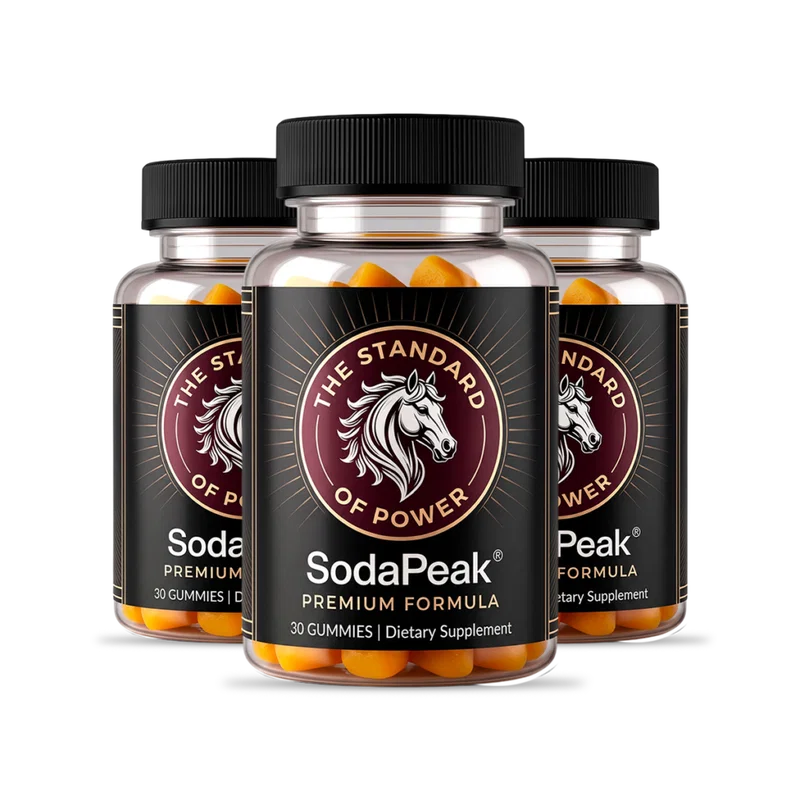
Once the jargon is out of the way, the goal is simple: support your body's natural testosterone, energy and drive every single day. SodaPeak is the routine we recommend for exactly that. It is a dietary supplement formulated to support testosterone, sustain energy, boost libido and peak your performance* — the four areas men notice first as levels drift down with age.
- Made for daily support. One product that covers testosterone, energy, libido and performance goals* instead of a shelf of single-ingredient pills.
- Easy to stick with. One great-tasting gummy a day with breakfast — and consistency is what makes daily support work.
- Quality you can check. Made in the USA in an FDA-registered, GMP-certified facility, GMO-free — the label terms we explained above.
- Clear pricing. $79 per bottle on the 2-bottle pack, $69 on the 3-bottle pack and just $49 per bottle on the 6-bottle pack, with free shipping on the 3- and 6-bottle bundles.
- Risk-free to try. A 60-day money-back guarantee gives you two full months to feel the difference.
It is the most practical way we know to give your body steady support while your sleep, training and waistline do the long-term work. Give it a few consistent weeks, and remember that the bundle pricing and guarantee are available on the official site only.
Talk to a doctor if: two morning tests come back low, your symptoms are strong or sudden, or you take prescription medication or have a heart, liver, kidney or prostate condition. A supplement supports a healthy routine; it does not replace medical care.
Frequently asked questions
What is the difference between total and free testosterone?
Total testosterone is all the testosterone in your blood, including the large share that is attached to proteins such as SHBG and albumin. Free testosterone is the small unbound fraction that your tissues can use straight away. A man can have a normal total number and still have a lower free number, which is why doctors sometimes order both.
What does high SHBG mean for a man?
SHBG (sex hormone-binding globulin) is a protein that holds on to testosterone tightly. When SHBG is high, more of your testosterone is locked up and less is free. SHBG tends to rise with age, which is one reason free testosterone usually falls faster than total testosterone in older men.
What is LH and why is it tested with testosterone?
LH (luteinizing hormone) is the signal your pituitary gland sends to the testes to make testosterone. Measuring it helps a doctor see where a problem starts: low testosterone with high LH points to the testes, while low testosterone with low or normal LH points to the brain's signalling.
Is andropause a real medical term?
Andropause, or male menopause, is a popular term rather than a precise diagnosis. Unlike menopause, testosterone does not switch off in midlife; it drifts down slowly. Doctors more often talk about age-related testosterone decline or late-onset hypogonadism when levels are clearly low and symptoms are present.
Is a testosterone booster the same as TRT?
No. TRT (testosterone replacement therapy) is prescription testosterone given as gels, injections, patches or pellets. A testosterone booster is a dietary supplement designed to support the body's own production and daily energy and drive. They are different categories, and anyone with diagnosed low testosterone should talk to a doctor.
What does the asterisk on a supplement label mean?
In the United States, the asterisk links a supplement's structure or function claim to the standard notice that the statement has not been evaluated by the Food and Drug Administration and that the product is not intended to diagnose, treat, cure or prevent any disease. You will see it on every legitimate supplement, including SodaPeak.
The bottom line
Total testosterone is the whole picture, free testosterone is the usable slice, SHBG decides how much is locked up, LH is the brain's signal, aromatase turns some testosterone into estradiol, and TRT is a prescription treatment that is very different from a daily supplement. Knowing these words turns a confusing lab report into a clear conversation. If your numbers are normal but you want more energy and drive, pair the basics with one simple daily gummy — SodaPeak is our pick. Prefer an overview first? Visit the Health Power home page for SodaPeak at a glance and current bundle pricing.