The short answer
A testosterone booster is an over-the-counter daily supplement that supports your body's own production of testosterone, energy and drive. TRT is a prescription hormone therapy, supervised by a doctor, for men with clinically low testosterone. They are not competitors: one is a wellness routine, the other is a medical treatment. For a generally healthy man whose energy and drive have slipped with age, the sensible order is habits plus a daily support routine first, a blood test and a doctor's conversation if symptoms are strong, and TRT only if a doctor says you need it. The daily routine we recommend is SodaPeak, a once-a-day gummy built to support testosterone, energy, libido and performance.*
Why so many men confuse the two
Type "low testosterone" into a search bar and you will be hit from both sides. Telehealth clinics advertise testosterone replacement therapy with a quick online quiz. Supplement brands promise to "boost T naturally." The words overlap, the symptoms they target overlap, and a lot of men end up assuming they are two versions of the same thing — one cheap, one expensive.
They are not. One adds a hormone to your body under medical supervision. The other contains no hormone at all and works alongside your body's own systems. Understanding that single difference clears up almost every question men ask about the two, including which one belongs in their life right now.
What a testosterone booster is
A testosterone booster (or "testosterone-support supplement") is a dietary supplement. It is sold without a prescription and is typically made from vitamins, minerals and botanical extracts chosen to support the body's own hormone production, energy, libido and performance. It does not contain testosterone.
Because it works with your natural production rather than replacing it, a booster behaves like a daily habit, not like a drug. The effects build gradually over weeks of consistent use, and the men who benefit most are generally healthy men whose drive, energy and recovery are not what they used to be. We wrote an honest guide to what that looks like in practice in do testosterone booster gummies actually work?
What TRT is
Testosterone replacement therapy (TRT) is a prescription medical treatment. A doctor confirms with blood tests — usually two morning readings — that your testosterone is clinically low (a condition called hypogonadism) and that you have symptoms. Testosterone is then supplied directly, typically through injections every one to two weeks, a daily gel, a patch or implanted pellets.
TRT reliably raises testosterone levels because it bypasses your body's production altogether. That is also its biggest trade-off: when the body senses enough testosterone coming from outside, it tends to scale back its own production, which is why TRT can affect fertility and why stopping it is not as simple as skipping a dose. It also requires ongoing blood work to monitor red blood cell count, prostate markers and other values. In other words, TRT is a long-term medical relationship, and that is exactly why it is reserved for men with a confirmed diagnosis.
Testosterone booster vs TRT: side by side
| Factor | Testosterone booster (supplement) | TRT (prescription therapy) |
|---|---|---|
| What it contains | Vitamins, minerals, botanicals; no hormone | Testosterone itself |
| How you get it | Over the counter, official site or store | Prescription after blood tests and a doctor's visit |
| Who it is for | Generally healthy men who want daily support for energy, drive and performance | Men diagnosed with clinically low testosterone and symptoms |
| How it works | Supports the body's own production and related systems | Replaces production from outside |
| Effect on natural production | Works alongside it | Usually suppresses it; can affect fertility |
| Daily effort | One gummy or pill a day | Injections, daily gel or pellets plus regular blood work and visits |
| Time to notice | Gradual, over a few weeks of consistent use | Weeks to months, with dose adjustments |
| Monitoring | None required (tell your doctor what you take) | Ongoing lab tests and follow-ups |
| Typical cost | From about $49 per month on bundle pricing (SodaPeak) | Varies widely; medication plus labs plus visits, often ongoing for years |
| Best first step for | Men whose energy and drive have slipped but who have no diagnosis | Men whose doctor has confirmed low T |
Three questions that tell you which lane you are in
1. Have you had your testosterone tested?
If the answer is no, you do not yet know whether you are a candidate for TRT at all. Many men with real symptoms — lower drive, afternoon fatigue, slower recovery — have testosterone in the normal range. For them, TRT is not on the table, and the question becomes how to support what they already have. Our guide to the signs of low testosterone in men walks through when a test is worth asking for.
2. How strong and how persistent are your symptoms?
Mild, gradual changes that started in your late thirties or forties point toward the normal slide that comes with age, where habits and a daily routine do the heavy lifting. Sudden, severe changes — a drive that disappeared in months, breast tenderness, infertility, constant exhaustion — are a reason to see a doctor soon rather than to buy anything.
3. Are you ready for a medical commitment?
TRT is not a 30-day experiment. It usually means years of injections or gels, regular labs and follow-up visits, and a conversation about fertility. If that sounds like more than your situation calls for, you have your answer: start with the simpler lane and reassess with your doctor later.
What men usually do (and the mistakes to avoid)
- Jumping to TRT without a diagnosis. Some online clinics make it easy. Adding a hormone you may not need is the wrong order of operations, and it carries real trade-offs for your natural production.
- Buying "instant" pills. Gas-station formulas promise a switch you can flip in an hour. We explain why that framing fails in the honest truth about "instant" male-performance pills.
- Trying a booster for a week and quitting. A supplement that supports your own production needs consistent daily use for weeks. Start-stop use tells you nothing.
- Ignoring the basics. Short sleep, a growing waistline, heavy drinking and no strength training work against testosterone no matter what you take. No product cancels those out; a good routine makes them easier to fix.
The order we recommend
- Fix the four basics. Seven to nine hours of sleep, strength training two or three times a week, a shrinking waist and less alcohol. These support healthy testosterone in every man, on TRT or not.
- Add a daily support routine. A once-a-day gummy like SodaPeak gives you steady support for testosterone, energy, libido and performance* and, just as important, a habit you keep. Take it with breakfast from day one.
- Give it real time. Judge the routine at the four-to-eight-week mark, not after four days. SodaPeak's 60-day guarantee is built for exactly that window.
- Get tested if symptoms are strong or persistent. Ask your doctor for a morning testosterone test. Tell them what you take.
- Let the doctor decide on TRT. If your levels are clinically low and symptoms match, TRT becomes a medical conversation with trade-offs your doctor will explain. Until then, it is not the first step.
Our recommendation: SodaPeak
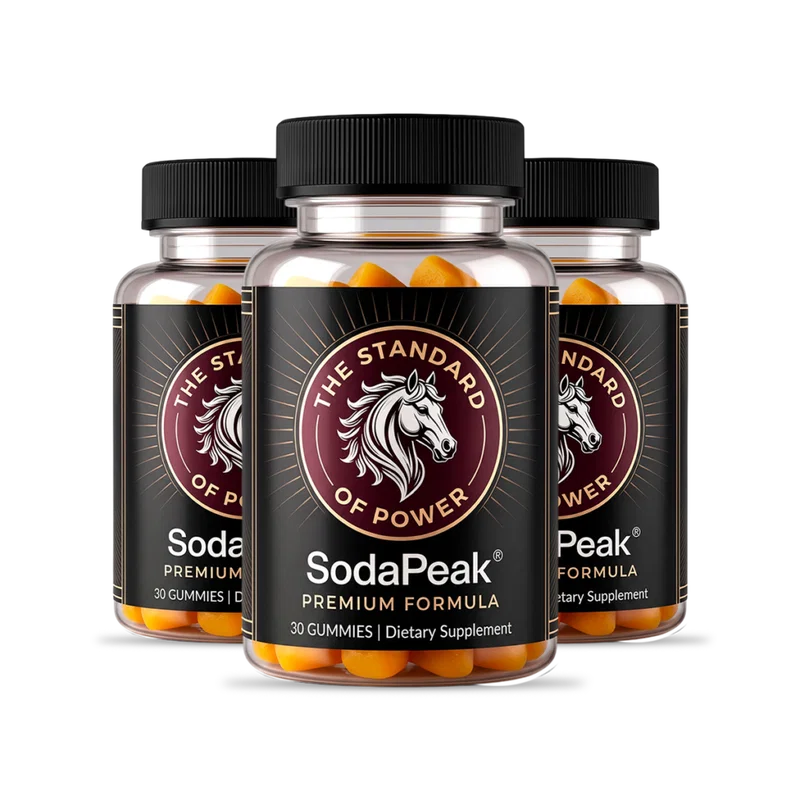
For the large group of men in the first lane — no diagnosis, just energy and drive that are not what they were — SodaPeak is the option we recommend. It is a dietary supplement, not a hormone, so it fits the "support first" step perfectly: one great-tasting gummy a day, formulated to support testosterone, sustain energy, boost libido and peak your performance.*
- Built for exactly this goal. Testosterone support, energy, libido and performance* — the four things men compare TRT and boosters on in the first place.
- The easiest routine of the two lanes. No injections, no gels, no labs, no appointments. One chewable gummy a day that you will actually keep taking, which is why we also wrote why a once-a-day gummy beats the pills you never finish.
- Made with care. Made in the USA in an FDA-registered, GMP-certified facility, GMO-free.
- Clear pricing. $79 per bottle on the 2-bottle pack, $69 on the 3-bottle pack and just $49 per bottle on the 6-bottle pack, with free shipping on the 3- and 6-bottle bundles. A fraction of what ongoing medical therapy costs.
- Risk-free trial window. A 60-day money-back guarantee covers the full four-to-eight weeks you need to judge any daily routine honestly.
To be clear, SodaPeak does not replace testing, a doctor or TRT for a man who genuinely needs it. What it does is give you the most practical starting point: steady daily support while your habits do their work, with no medical commitment and nothing to lose if it is not for you. Like any daily supplement, it works best with consistent use over a few weeks, and the bundle pricing and guarantee are available on the official site only.
Talk to a doctor if: your symptoms came on suddenly or are severe, you have breast tenderness, infertility, constant exhaustion or several signs of low testosterone together for weeks, or you are already considering TRT. Only a blood test can tell you where your levels are. Also check with a licensed healthcare provider before starting any supplement if you take prescription medication or have a medical condition.
Frequently asked questions
What is the difference between a testosterone booster and TRT?
A testosterone booster is an over-the-counter dietary supplement designed to support your body's own testosterone production, energy and drive. TRT (testosterone replacement therapy) is a prescription medical treatment that supplies testosterone directly through injections, gels, patches or pellets, under a doctor's supervision, for men diagnosed with clinically low testosterone.
Is a testosterone booster the same as taking testosterone?
No. A booster contains no hormone. It is made from vitamins, minerals and botanicals intended to support the body's own production. TRT adds external testosterone to your system, which is why it requires a prescription, blood work and monitoring.
Can a testosterone booster replace TRT?
No. If a doctor has diagnosed you with clinically low testosterone (hypogonadism), a supplement is not a substitute for medical treatment. Boosters are for generally healthy men who want everyday support for energy, drive and performance, not for treating a medical condition.
Which should I try first, a booster or TRT?
For most generally healthy men whose energy and drive have slipped with age, the sensible order is habits first (sleep, strength training, weight, alcohol), plus a daily support routine such as SodaPeak, then a blood test and a conversation with a doctor if symptoms are strong or persistent. TRT is a medical decision made with your doctor based on test results.
What are the downsides of TRT?
TRT is a long-term commitment that usually requires regular injections or daily gels, blood tests and follow-up visits. Because it supplies testosterone from outside, the body tends to reduce its own production, which can affect fertility, and it carries side effects your doctor will monitor. Those trade-offs are why it is reserved for men with a confirmed diagnosis.
Is SodaPeak a testosterone booster?
SodaPeak is a once-a-day men's gummy formulated to support testosterone, sustain energy, boost libido and peak your performance.* It is a dietary supplement, not a hormone or a medication, and it is the daily routine we recommend for men who want to support their natural drive and energy.
The bottom line
A testosterone booster and TRT are not two prices for the same thing. One is a daily wellness routine that supports your body's own production; the other is a prescription hormone therapy for men with a confirmed diagnosis. If you have not been tested and your symptoms are the gradual kind, start where the leverage is: sleep, strength, waistline, less alcohol and a once-a-day routine you will actually keep. For that routine, SodaPeak is our pick: one gummy a day, made in the USA and backed by a 60-day guarantee. If symptoms are strong, get tested and let your doctor guide the rest. Prefer to start from the top? Visit the Health Power home page for a quick overview of SodaPeak and current bundle pricing.