The quick answer
For adult men, total testosterone is usually considered normal somewhere between roughly 264 and 916 ng/dL, and most doctors start talking about "low" only when a morning result is below about 300 ng/dL and you have symptoms. Levels drift down slowly with age, but there is no single "perfect" number for each birthday — your lab's own range, the time of the test and how you actually feel matter more. If your number is normal but your energy and drive are not, a simple daily routine such as SodaPeak is the easiest place to start.*
Why "what's normal?" is such a common question
Getting a testosterone result back is oddly stressful. You see a number such as 412 or 587, a range printed next to it, and no explanation of what any of it means for your energy, your body or your sex life. Then you search online and find charts that say the "ideal" level for your age is something completely different.
Part of the confusion is that testosterone is not like height. It moves during the day, changes from one week to the next and is measured slightly differently by different labs. Once you understand those moving parts, your own number becomes far easier to read.
The reference ranges doctors actually use
In the United States, total testosterone is reported in nanograms per deciliter (ng/dL). Two reference points come up again and again:
- About 264–916 ng/dL. This is the "harmonized" range from a large 2017 study by Travison and colleagues in the Journal of Clinical Endocrinology & Metabolism, built from four big US and European cohorts of healthy, non-obese men aged 19 to 39. The middle of that group sat at about 531 ng/dL.
- Below 300 ng/dL. The American Urological Association uses this as its cut-off for low testosterone — but only together with symptoms and confirmed on more than one morning test. A single low number on its own is not a diagnosis.
Your own lab may print slightly different limits, because each lab calibrates its own equipment. Always compare your number with the range printed on your report first.
Normal testosterone by age: the honest version
You will find plenty of tidy charts online with an exact "normal" number for every five-year age band. Be careful with them: major medical societies have not adopted official age-by-age cut-offs, and those charts often mix up different studies and units. What is well established is the overall pattern:
| Age | What is typical | What to keep in mind |
|---|---|---|
| Teens | Levels rise sharply through puberty | Testosterone products are not for teenagers |
| 20s–early 30s | Peak years for most men; the 264–916 ng/dL range was built on men aged 19–39 | A low result here deserves a doctor's look rather than a guess |
| 30s–40s | A slow downward drift begins, often described as about 1% per year | Belly fat, poor sleep and stress can push it lower than age alone |
| 50s–60s | Many men sit lower than they did at 30 but still inside the lab range | Symptoms matter more than the exact number |
| 70+ | Averages are lower again, and free testosterone falls more than total | Talk to a doctor about any big changes in energy, mood or muscle |
The key takeaway: the decline with age is a gentle slope, not a cliff. Two men of the same age can easily be several hundred ng/dL apart and both be "normal".
Total vs free testosterone: the number behind the number
Most of the testosterone in your blood is attached to proteins, mainly SHBG (sex hormone-binding globulin) and albumin. Only a small slice is "free" and immediately available to your tissues. As men get older, SHBG tends to rise, so a man's total testosterone can look fine while his free testosterone is drifting lower.
That is why some doctors also order free testosterone and SHBG, especially when a man's total number is borderline but his symptoms are obvious. If you have ever thought "my level is normal, so why do I feel like this?", this is often part of the answer. For plain-English definitions of SHBG, free T, LH and the other terms on your report, see our testosterone glossary.
Why your result can swing from test to test
A single testosterone result is a snapshot, not a verdict. These everyday factors can move it noticeably:
- Time of day. Levels are highest in the morning and lower in the afternoon and evening. That is why guidelines ask for a test roughly between 7 and 10 a.m.
- A bad night's sleep. Short or broken sleep can pull the next morning's number down.
- Illness and stress. A cold, a tough week at work or a recent injury can temporarily lower testosterone.
- Body weight. Extra belly fat is linked with lower testosterone, which we explain in does belly fat lower testosterone?
- Alcohol and heavy training the day before can also shift your result.
- Different labs and units. Some countries report nmol/L. Multiply by about 28.84 to convert to ng/dL (10.4 nmol/L is roughly 300 ng/dL).
Because of all this, a low reading should always be repeated on a different morning before anyone draws conclusions.
When your number deserves a closer look
The number only matters in context. It is worth booking a doctor's appointment if:
- Two morning results come back below your lab's range or under about 300 ng/dL.
- You have clear symptoms — low drive, constant fatigue, erection changes, loss of muscle — that have lasted for weeks. Our guide to the signs of low testosterone in men lists the classic clues.
- Your symptoms came on suddenly, or you are in your twenties with a low result.
If you are clearly below the range, your doctor may discuss treatment, which is a very different category from a supplement. We compare the two in testosterone booster vs TRT.
Normal number, but you still don't feel like yourself?
This is the most common situation of all. Many men land in the 300s, 400s or 500s — technically normal — yet feel flatter, slower and less driven than they did a few years ago. For them, the goal is not to chase a specific number but to give the body what it needs to work at its best: seven to nine hours of sleep, strength training two or three times a week, a smaller waistline, less alcohol and steady daily support.
That last piece is where a simple supplement fits. A formula such as SodaPeak is designed to support natural testosterone, energy and libido in one gummy a day,* so you are not juggling a cabinet full of separate capsules.
What men usually try first
When men see a "meh" number, they often jump to extremes: buying five different single-ingredient pills, trying an aggressive diet that lasts a week, or ordering hormone products online without a prescription (please don't). The pattern is always the same — lots of effort, little consistency, and frustration when nothing sticks.
The men who do best keep it boring and repeatable: fix the basics, re-test in the morning if needed, and add one easy daily habit they can actually maintain.
Our recommendation: SodaPeak
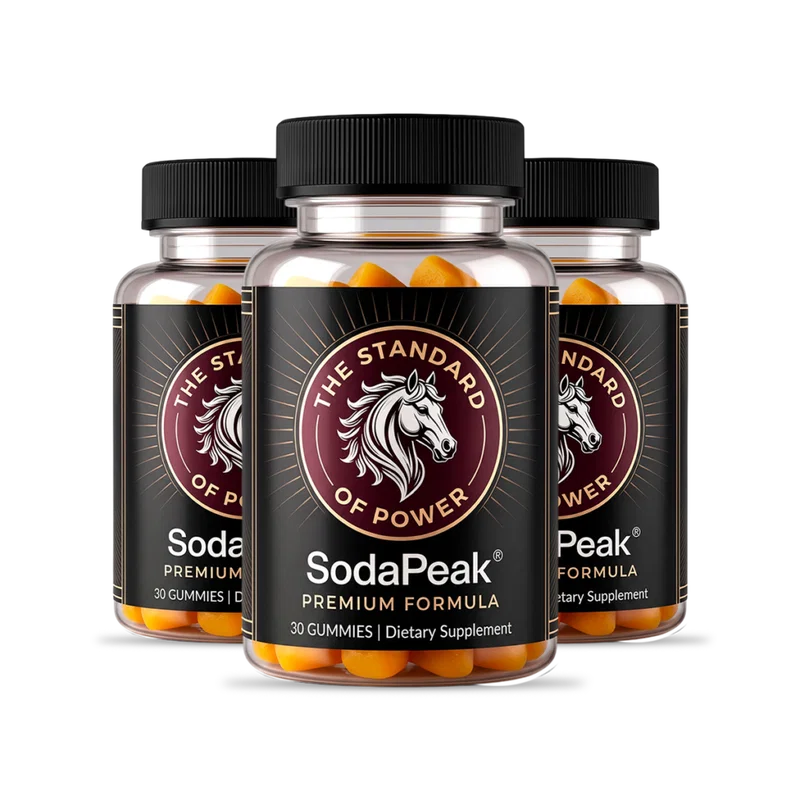
If your number is in the normal range but your energy, drive and performance are not where you want them, SodaPeak is the routine we recommend. It is a dietary supplement formulated to support testosterone, sustain energy, boost libido and peak your performance* — exactly the areas men notice first as levels drift down with age.
- Built for the slow slide. Daily support for testosterone, energy, libido and performance* in one product.
- Effortless to keep. One great-tasting gummy a day with breakfast — consistency is what makes daily support work.
- Made with care. Produced in the USA in an FDA-registered, GMP-certified facility, GMO-free.
- Clear pricing. $79 per bottle on the 2-bottle pack, $69 on the 3-bottle pack and just $49 per bottle on the 6-bottle pack, with free shipping on the 3- and 6-bottle bundles.
- Risk-free to try. A 60-day money-back guarantee gives you two full months to feel the difference.
It is the most practical way we know to support your body every day while your sleep, training and waistline do the long-term work. Like any daily supplement it works best with consistent use over a few weeks, and the bundle pricing and guarantee are available on the official site only.
Talk to a doctor if: two morning tests come back low, your symptoms are strong or sudden, or you take prescription medication or have a heart, liver, kidney or prostate condition. A supplement supports a healthy routine; it does not replace medical care.
Frequently asked questions
What is a normal testosterone level for a man?
Most US labs report total testosterone in ng/dL. A widely used harmonized reference range for healthy, non-obese men aged 19 to 39 runs from about 264 to 916 ng/dL, and the American Urological Association uses below 300 ng/dL, together with symptoms, as its threshold for low testosterone. Each lab prints its own range, so always compare your number with the range on your report.
Is 400 ng/dL a good testosterone level?
A total testosterone of around 400 ng/dL sits inside the normal range used by most labs. Whether it is good for you depends on how you feel, your age, your free testosterone and whether the test was taken in the morning. Plenty of men in the 300s and 400s feel fine, and some do not.
Does testosterone go down every year after 30?
On average, testosterone drifts down slowly from around the age of 30 or 40, often described as roughly 1% per year. It is a gentle slope rather than a cliff, and lifestyle factors such as belly fat, poor sleep and inactivity can make the drop larger than age alone.
What time of day should testosterone be tested?
In the morning, usually between about 7 and 10 a.m., when levels are naturally highest. Guidelines recommend confirming a low result with a second morning test on a different day before drawing any conclusions.
How do I convert testosterone from nmol/L to ng/dL?
Multiply nmol/L by about 28.84 to get ng/dL. For example, 10.4 nmol/L is roughly 300 ng/dL and 18 nmol/L is roughly 520 ng/dL.
Can a supplement raise my testosterone into the normal range?
A dietary supplement is not a treatment for diagnosed low testosterone. Formulas such as SodaPeak are designed to support your natural testosterone, energy and drive as part of a healthy routine. If your level is clearly below the lab range, talk to a doctor about your options.
The bottom line
A "normal" testosterone level for adult men usually falls somewhere between about 264 and 916 ng/dL, and doctors look closer below roughly 300 ng/dL when symptoms are present and confirmed on a second morning test. Your number will drift down slowly with age, but how you feel, your free testosterone and your daily habits matter more than any chart. If you are in the normal range yet running on empty, pair the basics with one simple daily gummy — SodaPeak is our pick. Prefer an overview first? Visit the Health Power home page for SodaPeak at a glance and current bundle pricing.