The quick answer
For about 60 years, doctors believed that more testosterone meant more prostate cancer. The evidence no longer supports that. Large pooled studies found no link between a man's natural testosterone level and his prostate cancer risk, and the 2023 TRAVERSE trial found no significant rise in high-grade prostate cancer with testosterone therapy. What has not changed: PSA screening before treatment, regular checks and avoiding testosterone in advanced prostate cancer.
Why so many men still worry about this
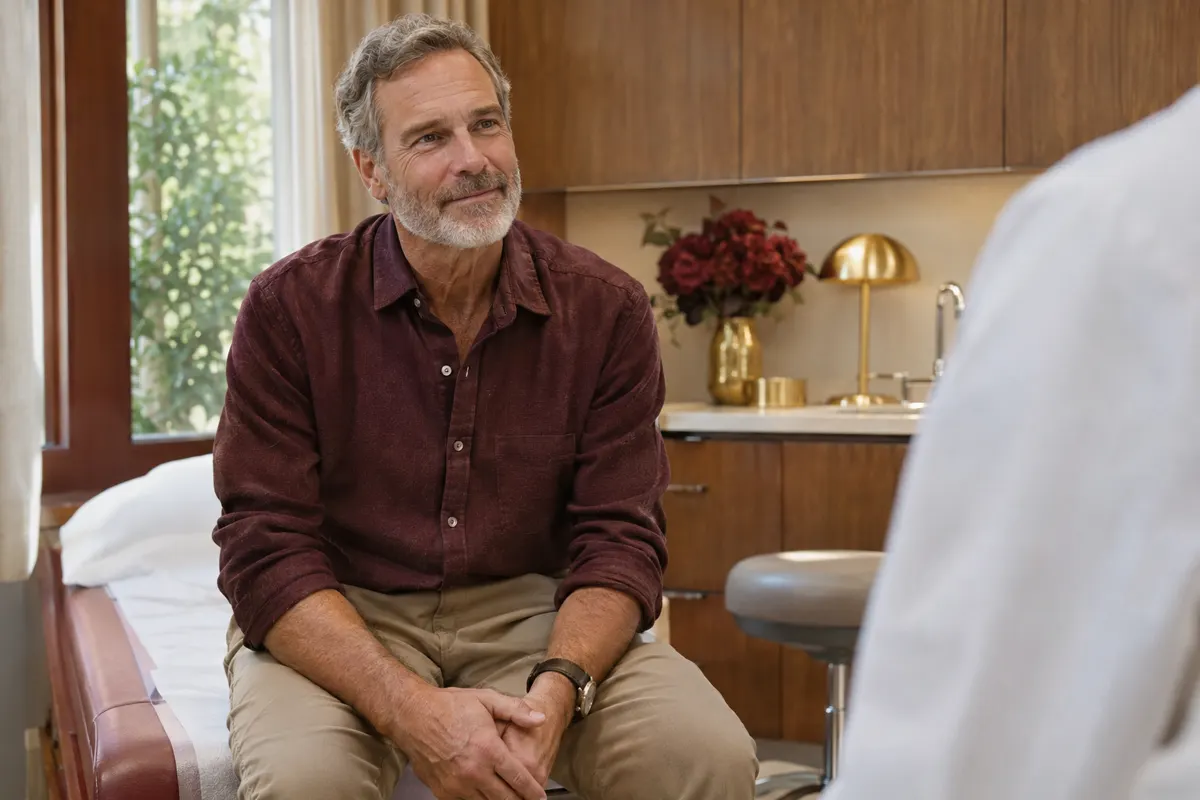
Ask a group of men in their 50s what they know about testosterone and the prostate, and many will say the same thing: "testosterone feeds prostate cancer." It is one of the most durable pieces of medical advice of the last century. It was taught in medical schools, repeated in clinics and printed in patient leaflets.
And it was not invented out of nowhere. It came from Nobel Prize-winning research. The story of how that advice was built, questioned and rewritten is a good example of how medicine is supposed to work: a reasonable idea, tested with better tools, then updated. Here is the timeline, the reasons each step changed and what you should take from it today.
1941: where the old advice came from
In 1941, urologist Charles Huggins and his colleague Clarence Hodges published studies showing that removing the testicles or giving estrogen, both of which drop testosterone, made advanced prostate cancer shrink in many men. It was a breakthrough. Lowering testosterone, now called androgen deprivation therapy, became a standard treatment for advanced prostate cancer, and Huggins received the Nobel Prize in 1966.
The logical next step seemed obvious: if lowering testosterone shrinks prostate cancer, raising it must make cancer grow. That idea became the rule, and for decades it meant that doctors treated testosterone like fuel near a fire. Later reviewers pointed out that the original claim about testosterone accelerating cancer rested on a very small number of patients, but by then the rule was everywhere.
Antes → hoje: the advice side by side
Here are the four pieces of advice that changed the most, what replaced them and why. Every row is tied to a published source you can look up.
| What doctors used to say | What the evidence says today | Why it changed | Source |
|---|---|---|---|
| More testosterone means more prostate cancer (from 1941) | A man's natural testosterone level is not linked to his prostate cancer risk. | Researchers pooled 18 prospective studies that measured hormones years before any diagnosis and found no association. | Endogenous Hormones and Prostate Cancer Collaborative Group, J Natl Cancer Inst, 2008 |
| Every bit of extra testosterone pushes prostate tissue to grow | The prostate responds strongly at very low testosterone, then becomes largely insensitive once receptors are saturated (the "saturation model"). | Lab and clinical data showed that androgen receptors are fully occupied at levels well below the normal range. | Morgentaler & Traish, European Urology, 2009 |
| Testosterone therapy is too risky for the prostate | In 5,204 men with low testosterone, high-grade prostate cancer was 0.19% with testosterone gel vs 0.12% with placebo, not a significant difference. | The first large placebo-controlled trial designed to measure prostate safety finally gave a direct answer. | TRAVERSE prostate safety trial, Bhasin et al., JAMA Network Open, 2023 |
| Every man over 50 should get a yearly PSA test | Men 55 to 69 should make an individual decision with their doctor; routine screening is not advised at 70+. | Trials showed the benefit is real but small, with risks of overdiagnosis and overtreatment. | U.S. Preventive Services Task Force, 2018 (an update is in progress) |
Notice what the table does not say. It does not say testosterone protects the prostate, and it does not say prostate checks are optional. It says the old, simple rule was too simple.
Why the old advice lasted so long
Medical advice tends to change slowly, and for good reasons. The 1941 work was solid for what it showed: lowering testosterone helps men with advanced prostate cancer, and it still does. The jump to "raising testosterone causes cancer" was an inference, and testing it properly needed things that did not exist yet: long-term studies that stored blood samples before anyone got sick, modern hormone assays, and a large randomized trial with enough men to count rare cancers.
Those tools arrived between the 1990s and 2023. The 2008 pooled analysis used blood drawn years before diagnosis. The 2009 saturation model explained why the old observations and the new ones did not actually contradict each other. And TRAVERSE, which enrolled men aged 45 to 80 across 316 U.S. sites, measured prostate outcomes directly for an average of about 22 months.
What has not changed (and still matters)
Updated advice is not the same as "anything goes." These points are as true today as they were decades ago:
- Advanced prostate cancer is still treated by lowering testosterone. Men with active or advanced disease do not take testosterone unless their oncologist says otherwise.
- Screening comes before treatment. The American Urological Association guideline (2018) advises measuring PSA in men over 40 before testosterone therapy starts, and monitoring during treatment.
- TRAVERSE excluded higher-risk men. Men with a PSA above 3.0 ng/mL or severe urinary symptoms were not enrolled, so the reassuring results apply to men who were screened first.
- Testosterone therapy is a prescription decision. It needs a confirmed diagnosis, usually two morning blood tests below the normal range, and follow-up blood work. Our comparison of testosterone boosters vs TRT explains the difference.
- New urinary symptoms deserve a visit. A weak stream, getting up often at night or blood in the urine are reasons to see a doctor, whatever your testosterone level.
What to follow today: a simple plan
If you are a man in your 40s, 50s or 60s wondering about testosterone and your prostate, this is the practical version of the new advice:
- Talk about PSA at your next checkup. From 55 to 69 it is a shared decision; earlier if you are Black or have a father or brother with prostate cancer. Our male physical exam checklist lists what to review by age.
- Get symptoms of low testosterone tested, not guessed. Tiredness, low drive and fewer morning erections have many causes. A morning blood test is the starting point; see our guide to signs of low testosterone.
- Do not let old fears stop a useful conversation. If you have confirmed low testosterone and real symptoms, the prostate is no longer an automatic "no." Your doctor can weigh it with you.
- Work on the basics either way. Sleep, strength training, a healthy waistline and moderate alcohol support healthy testosterone and your overall health, and they need no prescription.
Most men, of course, do not need testosterone therapy at all. They want more steady energy and drive, a routine that fits a busy week and something they will actually keep doing. That is where a once-a-day gummy like SodaPeak comes in for many of our readers: it is not a hormone, it does not replace screening, and it adds one easy step to the healthy habits above.*
Our recommendation: SodaPeak
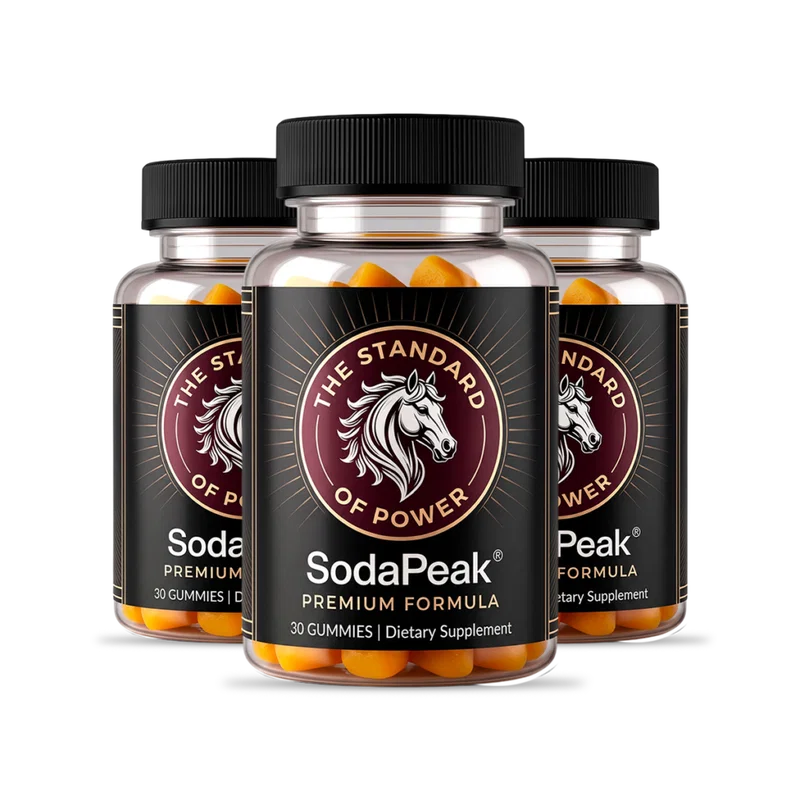
The modern advice is clear: get screened, get tested if you have symptoms, and build habits that support healthy testosterone. Once those are in place, SodaPeak is the daily step we recommend. It is a once-a-day gummy made to support testosterone, sustain energy, boost libido and help you perform at your peak,* and it contains no hormones.
- One gummy a day. Nothing to mix, nothing to inject and no pills to swallow; take it with breakfast.
- Made with care. Produced in the USA in an FDA-registered, GMP-certified facility, GMO-free.
- Fair pricing. $79 per bottle on the 2-bottle bundle, $69 on the 3-bottle bundle and $49 per bottle on the 6-bottle bundle, with free shipping on the 3- and 6-bottle bundles.
- Risk-free. A 60-day money-back guarantee gives you two full months to judge it.
If you have or had prostate cancer, or you take prescription medication, check with your doctor first, as you would with any supplement.
Frequently asked questions
Does high testosterone cause prostate cancer?
Current evidence does not show that men with naturally higher testosterone get more prostate cancer. A 2008 pooled analysis of 18 prospective studies in the Journal of the National Cancer Institute found no link between blood testosterone levels and prostate cancer risk.
Does testosterone therapy increase the risk of prostate cancer?
In the TRAVERSE trial (JAMA Network Open, 2023), 5,204 men aged 45 to 80 with low testosterone used testosterone gel or placebo for about 22 months on average. High-grade prostate cancer occurred in 0.19% vs 0.12% of men, a difference that was not statistically significant. Men with a PSA above 3.0 ng/mL were excluded, so screening before treatment still matters.
Why did doctors think testosterone caused prostate cancer?
In 1941 Charles Huggins and Clarence Hodges showed that lowering testosterone made advanced prostate cancer shrink. It seemed logical that raising testosterone would do the opposite, and that idea shaped advice for about 60 years, even though it rested on very few patients.
Can men with prostate cancer take testosterone?
For advanced prostate cancer, lowering testosterone is still a standard treatment, so testosterone is avoided. For men treated successfully or on active surveillance, researchers are studying it, but it is a decision only a urologist or oncologist can make case by case.
Should I get a PSA test before taking testosterone?
Yes. The American Urological Association guideline (2018) advises measuring PSA in men over 40 before starting testosterone therapy, and continued monitoring during treatment.
Is a testosterone booster gummy the same as testosterone therapy?
No. Testosterone therapy is a prescription hormone. A gummy like SodaPeak is a dietary supplement that contains no testosterone and is made to support your daily energy and vitality. If you have or had prostate cancer, ask your doctor before taking any supplement.
The bottom line
Does testosterone cause prostate cancer? The answer doctors gave for decades, "yes, so avoid it," came from a reasonable reading of 1941 research. Better studies have since replaced it: natural testosterone levels are not linked to prostate cancer risk, and testosterone therapy in screened men did not significantly raise high-grade cancer in the largest trial to date. What stays the same is the routine that protects you: talk about PSA, test symptoms instead of guessing, avoid testosterone in advanced prostate cancer, and keep your daily habits strong. For that daily step, SodaPeak is our pick. For a quick overview of the gummy and current bundle pricing, visit the Health Power home page.
Sources: Huggins C, Hodges CV, Cancer Research, 1941; Endogenous Hormones and Prostate Cancer Collaborative Group, J Natl Cancer Inst 2008 (PMID 18230794); Morgentaler A, Traish AM, Eur Urol 2009 (PMID 18838208); Bhasin S et al., JAMA Netw Open 2023 (PMID 38150256); American Urological Association, Evaluation and Management of Testosterone Deficiency guideline, 2018; U.S. Preventive Services Task Force, Prostate Cancer: Screening, 2018.