The quick answer
Yes, beer can lower testosterone, but the dose decides. In a controlled trial, about three beers' worth of alcohol a day for three weeks cut testosterone by roughly 7%, and heavy or binge drinking is linked to bigger drops. One or two beers now and then has not been shown to do lasting harm. Every source we compared agrees on the same practical rule: fewer drinks, fewer heavy nights and more sleep.

Why this question is everywhere right now
Searches for "does beer lower testosterone" have climbed fast this autumn, and the timing makes sense. Football Sundays, Thanksgiving and a month of holiday parties put more beer in front of more men than at any other time of year. At the same time, testosterone is one of the most searched men's health topics, and social media is full of confident claims: beer gives you "man boobs", hops are "pure estrogen", one drink "kills your T for days".
Some of that is true, some is exaggerated and some is simply made up. The fastest way to sort it out is to put the serious sources next to each other and look at what they actually say, not what a headline says they say. That is what this article does.
The sources, side by side
We used two human studies that tested beer or alcohol directly, one recent scientific review and three official drinking guidelines. Each row links the claim to its origin and year.
| Source | What it says | Year |
|---|---|---|
| Sierksma et al., Alcoholism: Clinical & Experimental Research (diet-controlled trial) | 10 healthy middle-aged men drank beer with dinner (40 g alcohol a day, about 3 U.S. standard drinks) for 3 weeks, and alcohol-free beer for another 3 weeks. Testosterone was 6.8% lower during the beer weeks. | 2004 |
| Couwenbergs, Journal of Steroid Biochemistry (72 men, beer or wine) | After heavy single sessions, testosterone went both up and down depending on timing and amount; DHT (a strong form of testosterone) fell and estradiol rose. | 1988 |
| Smith, Lopresti & Fairchild, Expert Review of Endocrinology & Metabolism (review) | A low to moderate amount can briefly raise testosterone; a large volume, especially when chronic, lowers it through stress hormones, inflammation and oxidative stress. | 2023 |
| NIAAA (U.S. National Institute on Alcohol Abuse and Alcoholism) | One standard drink = 14 g of alcohol = 12 oz of regular beer (about 5%). For men, heavy drinking means 5 or more drinks on any day or 15 or more in a week. | Current guidance |
| UK Chief Medical Officers (used by the NHS) | Keep to no more than 14 UK units a week (roughly 6 pints of average beer), spread over 3 or more days, with several drink-free days. | 2016 |
| World Health Organization (Europe) | No level of alcohol is safe for health; risk starts with the first drink. | 2023 |
Note what is and is not in this table. None of these sources claims that a beer with dinner wrecks your hormones. And none of them gives you a "testosterone-safe" number of drinks, because the studies measure averages in small groups, not your personal levels.
Where all the sources agree
Put the six rows together and four points come up again and again. These are the parts you can act on with confidence:
- The amount matters more than the drink. The Dutch trial compared beer with alcohol-free beer, and the drop showed up only with alcohol. The 2023 review reaches the same conclusion from many studies: it is the dose of alcohol, not beer itself.
- Heavy and chronic drinking is the real problem. Every source treats regular heavy intake as the scenario that hurts testosterone and overall health. NIAAA's line for men (5+ drinks in a day or 15+ in a week) is a useful red flag.
- Short-term effects are small at modest intakes. About three drinks a day for three weeks produced a drop of under 7% on average. That is real, but far from the dramatic "crash" claimed online.
- Less is better for your health overall. The UK and WHO go further than U.S. guidance, but they point the same way: fewer drinks per week and more alcohol-free days.
Where they disagree, and why
"A drink or two raises testosterone" vs "any drink lowers it"
The 2023 review describes a brief rise after a small amount, linked to how the liver processes alcohol. The 1988 study saw both rises and falls within hours. The difference comes down to timing: blood drawn a few hours after drinking can look very different from blood drawn the next morning. That is why your testosterone test should be done in the morning, after a normal night, as our guide to normal testosterone levels by age explains.
The weekly limit: U.S. vs UK vs WHO
NIAAA defines heavy drinking at 15 or more drinks a week for men. The UK advises no more than 14 units, which works out to roughly 8 U.S. standard drinks. The WHO says there is no safe amount at all. They are not contradicting each other on the biology; they are answering different questions. The U.S. line flags risky drinking, the UK sets a low-risk ceiling, and the WHO speaks about cancer and lifetime risk across a whole population.
The hops question
Hops contain plant compounds that act like weak estrogens, and the 1988 study raised the idea that they might explain the rise in estradiol. Since then, researchers have mostly pointed elsewhere. The amounts in a normal beer are small, and heavy drinking brings bigger factors with it: extra calories, a growing waistline and poor sleep. Belly fat itself converts testosterone into estrogen, which is why our article on whether belly fat lowers testosterone matters as much as the beer label.
What this means for your week
Turn the consensus into simple rules you can follow through the holidays:
- Count in standard drinks. A 16 oz craft IPA at 7% is close to two standard drinks, not one.
- Avoid the big nights. Five or more in one sitting is the pattern every source flags. Alternate each beer with water or a zero-alcohol beer.
- Keep several alcohol-free days. The UK advice of spreading drinks out and taking days off is easy to copy.
- Stop drinking 3 to 4 hours before bed. Alcohol fragments sleep, and testosterone is made mostly during sleep.
- Watch the waistline. Beer calories add up fast, and extra belly fat works against your testosterone.
If you already notice low energy, lower drive or fewer morning erections, cutting back on alcohol is one of the easiest experiments you can run. Our list of what causes low testosterone in men shows the other factors you control. And if you drink heavily, speak with your doctor before stopping suddenly, because withdrawal can be dangerous.
This is also where a simple daily anchor helps. Men who swap the third beer for a better routine often like having one small step that keeps them on track, and that is exactly the role a once-a-day gummy like SodaPeak plays in our readers' mornings.*
Our recommendation: SodaPeak
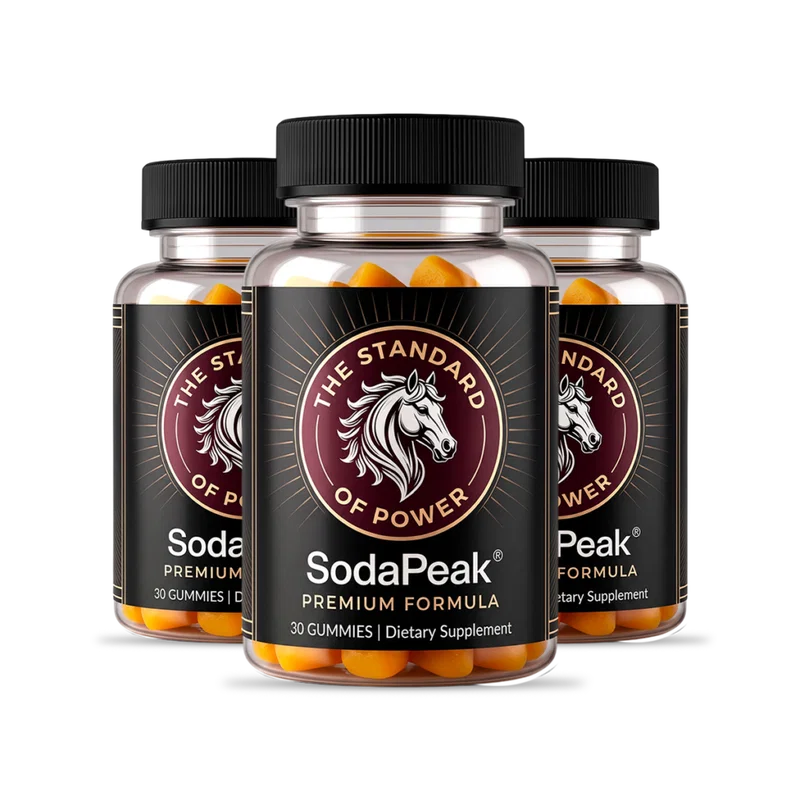
Every source agrees on the basics: fewer drinks, better sleep, a healthy waist. Once you have those in place, SodaPeak is the daily step we recommend. It is a once-a-day gummy made to support testosterone, sustain energy, boost libido and help you perform at your peak,* and it fits right into the new routine you build when the extra beers go.
- One gummy a day. Nothing to mix and no pills to swallow; take it with breakfast.
- Made with care. Produced in the USA in an FDA-registered, GMP-certified facility, GMO-free.
- Fair pricing. $79 per bottle on the 2-bottle bundle, $69 on the 3-bottle bundle and $49 per bottle on the 6-bottle bundle, with free shipping on the 3- and 6-bottle bundles.
- Risk-free. A 60-day money-back guarantee gives you two full months to judge it.
Pair it with the weekly rules above and you are working with the consensus, not against it.
Frequently asked questions
Does one beer lower testosterone?
There is no good evidence that a single beer meaningfully lowers testosterone. A 2023 review in Expert Review of Endocrinology and Metabolism found that a small to moderate amount of alcohol can briefly raise testosterone, while large amounts, especially over time, lower it.
How many beers a day lower testosterone?
In a diet-controlled Dutch trial, men who drank beer providing 40 grams of alcohol a day, roughly three U.S. standard drinks, for three weeks had testosterone about 6.8% lower than when they drank alcohol-free beer. Larger and longer intakes are linked to bigger drops.
Do hops in beer lower testosterone?
Hops contain plant estrogens, which is where the beer-belly and man-boobs myths come from. The amounts in a normal beer are small, and researchers point to the alcohol itself, the extra calories and poorer sleep as the main ways heavy drinking affects testosterone.
Does testosterone come back after you stop drinking?
For most moderate drinkers, cutting back removes the short-term effect within days to weeks. Long-term heavy drinking can affect the testes and liver, so recovery may be slower. If you drink heavily, talk to your doctor before stopping suddenly.
Is non-alcoholic beer bad for testosterone?
In the Dutch trial, alcohol-free beer was the comparison drink, and the drop in testosterone appeared only during the alcoholic beer weeks. That points to the alcohol, not the beer itself, as the factor that matters.
The bottom line
Does beer lower testosterone? At heavy or chronic intakes, yes; at a beer or two now and then, not in any way research has shown to last. The trial data, the 2023 review and the official guidelines all land on the same advice: count your drinks, skip the big nights, protect your sleep and keep your waist in check. Add one simple daily habit on top, and for that daily step, SodaPeak is our pick. For a quick overview of the gummy and current bundle pricing, visit the Health Power home page.